↓
 

ISSN 1993-3916

Arid Ecosystems

The “Arid Ecosystems” journal was organized by the decision of General Biology Division of the Russian Academy of Sciences.

  •  Home
  • Preprint
  • Contacts
  • Open Access 
  • Archive
    • Issues 1990s
      • Issues for 1995
      • Issues for 1996
      • Issues for 1997
      • Issues for 1998
      • Issues for 1999
      • Issues for 2000
    • Issues 2000s
      • Issues for 2001
      • Issues for 2002
      • Issues for 2003
      • Issues for 2004
      • Issues for 2005
      • Issues for 2006
      • Issues for 2007
      • Issues for 2008
      • Issues for 2009
      • Issues for 2010
    • Issues 2010s
      • Issues for 2011
      • Issues for 2012
      • Issues for 2013
      • Issues for 2014
      • Issues for 2015
      • Issues for 2016
      • Issues for 2017
      • Issues for 2018
      • Issues for 2019
    • Issues 2020s
      • Issues for 2020
      • Issues for 2021
      • Issues for 2022
      • Issues for 2023
      • Issues for 2024
      • Issues for 2025

Архив рубрики: article-1-2021

Навигация по записям

Следующие записи →

SEASONAL DYNAMICS OF THE STRUCTURE OF THE COMMUNITIES OF SOIL NEMATODES IN CHESTNUT SOILS OF THE MANYCH VALLEY UNDER PASTURE LOAD

Arid Ecosystems

Shmatko V.Yu.,  Sushko K.S.,  Sokolova T.A., Ilyina L.P. SEASONAL DYNAMICS OF THE STRUCTURE OF THE COMMUNITIES OF SOIL NEMATODES IN CHESTNUT SOILS OF THE MANYCH VALLEY UNDER PASTURE LOAD // Arid ecosystems. 2021. V. 27. № 1 (86). P. 106-118. | PDF

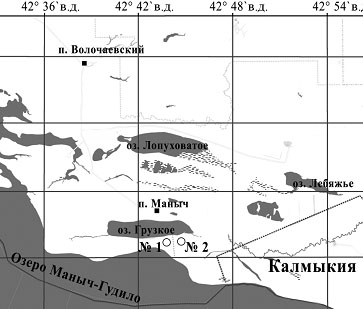
In this article, two key areas with virgin and pasture biotopes were studied, for which soil parameters were determined, a brief description of the vegetation was given, and the spectral reflectance properties of the vegetation cover (NDVI) were calculated using Landsat 8 OLI images.

The seasonal dynamics of the structure of soil nematode communities in chestnut solonetzic soils under pasture load has been studied. A number of features have been identified that are manifested in the species diversity of the fauna, changes in the total number, domination of certain trophic groups and genera.

For the studied areas, 133 taxa were identified, exact species identification is given for 58 species. It has been established that the features of soil nematode communities in different seasons of the year are manifested in the dominance of certain trophic groups and genera, as well as their total number at key sites.

In general, the fauna of nematodes can be assessed as quite diverse – Shannon’s index (Hˊ) throughout the year at all sites varied within the same values. The nematode community maturity index by Bongers (MI) indicates the stability of their habitat conditions.

Keywords: soil nematodes, chestnut solonetzic soils, pasture load, vegetation, ecological and trophic composition, diversity index, community maturity index.

DOI: 10.24411/1993-3916-2021-10142
TYPIZATION OF ARABLE LAND IN AGROLANDSCAPES OF VOLGOGRAD REGION

Arid Ecosystems

Belyakov A.M. TYPIZATION OF ARABLE LAND IN AGROLANDSCAPES OF VOLGOGRAD REGION // Arid ecosystems. 2021. V. 27. № 1 (86). P. 119-126. | PDF

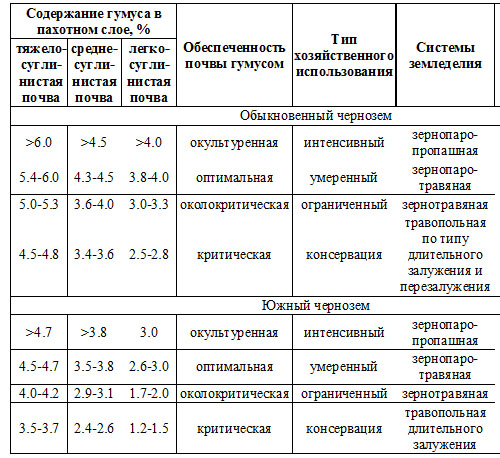
By the example of the Volgograd region the problem of the ecological state of the agrolandscapes of the zone of insufficient moisture and the modern approaches to their preservation and improvement is indicated. The potential agroresources of the region, the state and level of production of the agricultural sector at the moment are presented. Scientifically based the methodological approaches of doing economic activity on the principles of adaptive landscape agriculture are presented. Typization of arable land in agrolandscapes of the Volgograd region was carried out taking into account the bioclimatic potential of land use territories. Particular importance is attached to the distribution of arable land along the slopes of the area, since the role of the relief in varying the crop yields is very high and amounts to 40-70%, and depends on the erodedness of the soil, the crop may decrease by 10-80%. There is a definite correlation between grain yield and soil properties. In particular, the improvement of the nutrition regime of the soil and an increase in the cultivation of the soil contribute to reducing the negative impact of drought on the yield of grain crops. The method for differentiating arable land by intensity of use has developed in the FSC of Agroecology of the RAS, where the provision of the arable layer with total humus was taken as the main criterion for the level of soil fertility. Four levels were highlighted: cultivated, optimal, near-critical and critical. Ultimately, the development of adaptive-landscape approaches is confirmed by the results of practical farming.

Keywords: agrolandscape, adaptive farming, typization of arable land, agrotechnology, bioclimatic potential, soil fertility.

DOI: 10.24411/1993-3916-2021-10143

WATER TEMPERATURE REGIME OF UPPER DON RIVER BASIN AS A REACTION TO CLIMATE CHANGE PROCESSES

Arid Ecosystems

Dmitrieva Vera A., Buchik SvetlanaV. WATER TEMPERATURE REGIME OF UPPER DON RIVER BASIN AS A REACTION TO CLIMATE CHANGE PROCESSES // Arid ecosystems. 2021. V. 27. № 1 (86). P. 127-134. | PDF

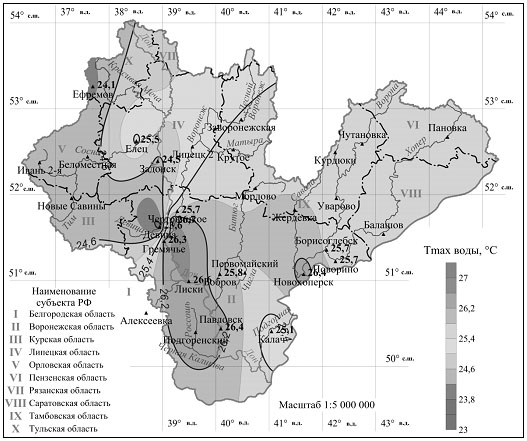
The current water temperature regimen in the rivers of the Upper Don is changing as a result of local climate processes which in turn are a reflection of the global climate change. The first ten years of the current century saw the near-surface air temperatures in the Upper Don increase on average by 1 degree Celsius, causing changes in the river water temperature regimen. This regimen reflects the interaction between atmosphere and hydrosphere. At the same time, the water masses are in contact with the water bed, which can also influence the temperature of the water. Due to the continuous interaction between different environments, the atmospheric temperature is not always the leading factor in the river water temperature dynamics. Despite the unidirectional tendency towards the increase in the regional air temperature in all of the Don catchment area, the water temperature changes are not straightforward and can be paradoxical. The right Don tributaries (Krasivaya Mecha, Devitsa, Chernayaa kalitva et al), coming from the Central Russian Upland, are seeing a steady decrease in water temperature. However, the left tributaries (Voronezh, Bityug), coming from the Oka-Don lowland plain, are showing a maximum water temperature increase. The water temperature is decreasing in the Podgornaya River, a left tributary coming from the Kalach elevation. The Don watercourse proper registers a water temperature increase. The controversial superficial water layer temperature dynamics can be attributed to annual water runoff distribution, the decrease in snow volume and the increase in the part of ground water influx during the periods of the water maximum formation.

Keywords: Upper Don, climate, the thermal regime, water temperature, air temperature.

DOI: 10.24411/1993-3916-2021-10144

Навигация по записям

Следующие записи →

About the Journal

  • General Information
  • Open Access 
  • Preprint
  • Topics of the journal
  • Editoral Board
  • Editorial Policy
  • Editorial Ethics

Articles Supplying

  • Rules of Manuscripts Supplying
  • Articles Design
  • Article Structure
  • Guidens for Writing an Article
  • Articles Translation

Review of manuscripts

  • Review of manuscripts

Archive

  • 1990s editions
  • 2000s editions
  • 2010s editions
  • 2020s editions
    • Issues for 2020
    • Issues for 2021
    • Issues for 2022
    • Issues for 2023
    • Issues for 2024
    • Issues for 2025
  • Events

_______________________

©2026 - Arid Ecosystems - Weaver Xtreme Theme
↑