↓
 

ISSN 1993-3916

Arid Ecosystems

The “Arid Ecosystems” journal was organized by the decision of General Biology Division of the Russian Academy of Sciences.

  •  Home
  • Preprint
  • Contacts
  • Open Access 
  • Archive
    • Issues 1990s
      • Issues for 1995
      • Issues for 1996
      • Issues for 1997
      • Issues for 1998
      • Issues for 1999
      • Issues for 2000
    • Issues 2000s
      • Issues for 2001
      • Issues for 2002
      • Issues for 2003
      • Issues for 2004
      • Issues for 2005
      • Issues for 2006
      • Issues for 2007
      • Issues for 2008
      • Issues for 2009
      • Issues for 2010
    • Issues 2010s
      • Issues for 2011
      • Issues for 2012
      • Issues for 2013
      • Issues for 2014
      • Issues for 2015
      • Issues for 2016
      • Issues for 2017
      • Issues for 2018
      • Issues for 2019
    • Issues 2020s
      • Issues for 2020
      • Issues for 2021
      • Issues for 2022
      • Issues for 2023
      • Issues for 2024
      • Issues for 2025

Архив рубрики: article-4-2021

Навигация по записям

Следующие записи →

FEATURES OF FORAGE VEGETATION AS ONE OF THE POSSIBLE CAUSES OF MASS DEATH OF SAIGA ANTELOPE ON STEPPE PASTURES

Arid Ecosystems

Abaturov B.D.,  Gorbunov S.S.,  Koshkina A.I. FEATURES OF FORAGE VEGETATION AS ONE OF THE POSSIBLE CAUSES OF MASS DEATH OF SAIGA ANTELOPE ON STEPPE PASTURES // Arid ecosystems. 2021. V.27. № 4 (88). P. 93-100. | PDF

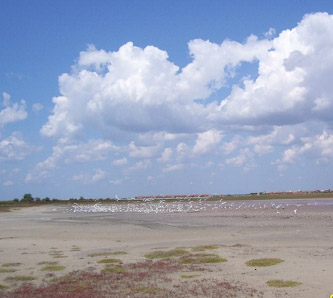
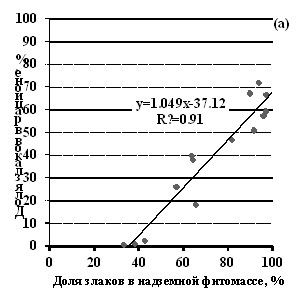
Modern climatic changes, weakening of the anthropogenic pasture load, the growth of steppe fires, have caused the expansion and dominance of grasses vegetation on the steppe pastures of Russia and Kazakhstan since the end of the 20th century, which caused a deterioration in the forage quality of pasture vegetation, was one of the reasons for the depression of the saiga population and, of the increase in cases of mass mortality of saigas. Mass deaths of saigas occurred in Kazakhstan in 2015, when about 200,000 animals died. A large number of different versions have been put forward about the causes of death: from an infectious disease (hemorrhagic septicemia), toxic forage plants, unfavorable weather conditions, to the destructive effect of rocket fuel. In this article, we have considered a different versions of death associated with the negative effect of low-quality food in places of death of saigas. It has been shown that the supply of food to saigas on steppe pastures consistently decreases with an increase in the abundance of grasses in forage vegetation. Suitable pastures that provide adequate nutrition for breeding saigas include pastures with a share of grasses in the aboveground phytomass of no more than 30%. If this level is exceeded, the pastures do not provide the necessary level of nutrition for the breeding saigas and are unsuitable for them. It is possible that during the spring migration the saigas found themselves within the steppe regions with a predominance of turf grasses (65-75%), exceeding their permissible (threshold) abundance (30%). This condition of the pasture did not provide the necessary nutrition, caused a weakening of animals during the rearing period, promoted the activation of infectious septicemia in breeding saigas, which, possibly, with the combined action of both factors, led to their mass death.

Keywords: Saiga antelope, steppes of Kazakhstan, steppe fires, abundance of grasses, suitability of pastures, mass mortality of saigas, pasteurellosis, hemorrhagic septicemia, forage quality of vegetation, forage digestibility, forage availability.

Financing. The work was carried out under a grant of Russian Foundation for Basic Research, project No. 18-04-00172: «Toxic components in the vegetation of natural pastures as indicators of the quality of forage resources, their impact on food security and the state of populations of herbivorous mammals in terrestrial ecosystems.»

DOI: 10.24412/1993-3916-2021-4-93-100
ABOUT BIOTECHNOLOGICAL POTENTIAL OF THE PRODUCTIVE RESOURCES OF GRAPES GROWN IN ARID CONDITIONS

Arid Ecosystems

Vlasova O.K., Daudova T.I., Bakhmulaeva Z.K., Magadova S.A., Magomedov G.G. ABOUT BIOTECHNOLOGICAL POTENTIAL OF THE PRODUCTIVE RESOURCES OF GRAPES GROWN IN ARID CONDITIONS // Arid ecosystems. 2021. V.27. № 4 (88). P. 101-106. | PDF

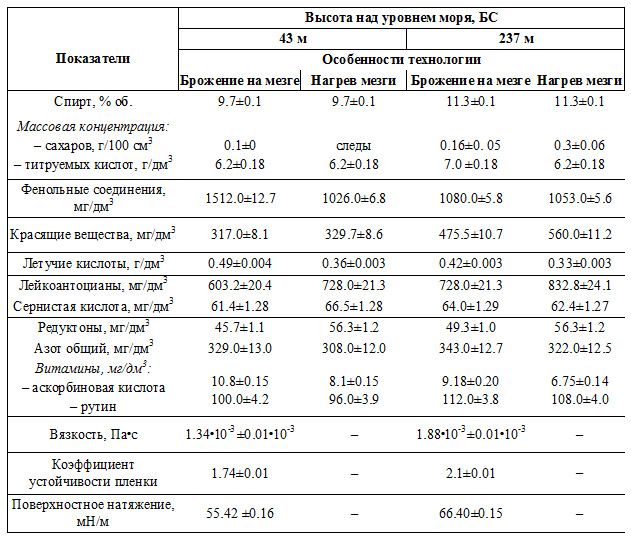
The article presents the results of studying the biotechnological properties of grapes of the introduced variety Moldova, cultivated in various soil and climatic conditions of arid areas of the plain and foothills of Dagestan.The peculiarities of the synthesis of the components of the carbohydrate, acid, nitrogen, phenolic, amino acid and vitamin composition of grapes, depending on the place of its cultivation, are revealed.It is noted that even with low moisture availability and high values of the sum of active temperatures, the grapes of the Moldova variety, growing in Dagestan, are able to synthesize a large amount of valuable nutrients.The ecological plasticity and technological versatility of this variety is shown, the possibility of obtaining high-quality wine materials from it for the production of sparkling and original special wines is experimentally proved.

Keywords: plain, foothills, arid conditions, Moldova grapes, wine material, biologically active substances, synthesis of components, sum of active temperatures.

Financing. The work was carried out with the financial support of the RAS Presidium Program No. 41 «Biodiversity of natural systems and biological resources of Russia».

DOI: 10.24412/1993-3916-2021-4-101-106

THE INFLUENCE OF THE IONIC COMPOSITION OF WATER ON THE STRUCTURE OF THE ZOOPLANKTON OF THE LAKES OF THE TAZHERAN STEPPE (WESTERN BAIKAL REGION)

Arid Ecosystems

Yermolaeva N.I.,  Fetter G.V. THE INFLUENCE OF THE IONIC COMPOSITION OF WATER ON THE STRUCTURE OF THE ZOOPLANKTON OF THE LAKES OF THE TAZHERAN STEPPE (WESTERN BAIKAL REGION) // Arid ecosystems. 2021. V.27. № 4 (88). P. 107-117. | PDF

An assessment of the modern state of the zooplankton of diverse lakes of the Tazheran steppe and the identification of the features of the formation of the structure of communities depending on the change in the ionic composition of water under the influence of changing hydrophysical conditions was carried out. In August 2017, hydrochemical indicators and zooplankton of 6 lakes were investigated: Namshi-Nur, Holbo-Nur, Gyzgi-Nur, Nuhu-Nur, nameless and Hara-Nur. It has been shown that when lakes dry and salinity increases, a decrease in the species diversity of zooplankton is noted. The main factors explaining 77.9% of the dispersion of numerical indicators of certain types of zooplankton in the lakes of the Tazheran steppe were salinity, the depth of the lakes, primary production, the content of organic substances, and the amount of dissolved oxygen. Different types of zooplankton respond to changes in each individual factor in different ways. When assessing the effect of a particular factor on zooplankton, it is necessary to take into account the limits of tolerance of individual species to the effects of each factor individually and to their combination.

Keywords: salt lakes, zooplankton, hydrochemical conditions, environmental factors, ecological optimums, Baikal region.

Financing. The work was carried out within the framework of the Project 134.1.2. of the program of the Federal Research Institute of State Academies «Spatial and temporal organization of aquatic ecosystems and assessment of the influence of natural and anthropogenic factors on the formation of hydrobiocenoses and the quality of surface waters».

DOI: 10.24412/1993-3916-2021-4-107-117

THE INFLUENCE OF ANTHROPOGENIC FACTORS ON THE CHEMICAL COMPOSITION OF LAKES IN ARID REGIONS OF DAGESTAN (ON THE EXAMPLE OF THE GREAT AND SMALL TURALI)

Arid Ecosystems

Yusupov A.R., Kurbanismailova A.S., Alkhulaev K.G., Mamaev A.S., Yusupov Z.A. THE INFLUENCE OF ANTHROPOGENIC FACTORS ON THE CHEMICAL COMPOSITION OF LAKES IN ARID REGIONS OF DAGESTAN (ON THE EXAMPLE OF THE GREAT AND SMALL TURALI) // Arid ecosystems. 2021. V.27. № 4 (88). P. 118-122. | PDF

Anthropogenic impact on the ecosystems of arid areas leads to environmental pollution. Assessment of the state of nature of arid regions is the most important task in the context of scientific and technological progress.

When studying the current state of the Turaly lakes, as representatives of reservoirs of arid conditions, various research methods were used. This made it possible to draw a conclusion about the level of pollution of objects and to assess the ecological condition of reservoirs characteristic of natural complexes of arid conditions.

Key words: arid climate, ecology, anthropogenic influence, pollution, salinization, Turaly lakes.

Financing. The work was carried out on the topics of the Research Institute of the Russian Academy of Sciences: «Assessment and revision of the mineragenic potential of the North Caucasus on the basis of modern stratigraphic and lithological-geochemical methods of analysis of sedimentary complexes»(State registration No. AAAA19-119122690018-8) and «Ecological and geochemical features of groundwater in the North-Eastern Caucasus (Dagestan). Natural and anthropogenic pollution factors» (State Registration No. AAAAA 117-117021310203-3.

DOI: 10.24412/1993-3916-2021-4-118-122

PLANKTON DEVELOPMENT OF THE DIFFERENT LITORAL BIOTOPES IN SODA LAKES

Arid Ecosystems

Tashlykova N.A., Afonina E.Yu. PLANKTON DEVELOPMENT OF THE DIFFERENT LITORAL BIOTOPES IN SODA LAKES // Arid ecosystems. 2021. V.27. № 4 (88). P. 123-132. | PDF

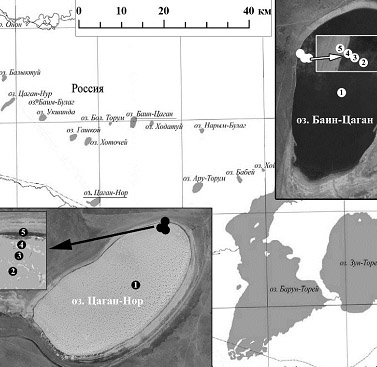
Water bodies with a naturally high level of salinity are geographically widespread. They are found not only in hot and arid regions, but also in some regions with temperate and cold climates, in particular in Eastern Siberia. Usually these are groups of closed lakes, the common features of which are their location in the semiarid climate zone, the absence of surface runoff, shallow depth, and a limited catchment area. They have significant variations in size and salinity. The article presents the results of studies of the structure of plankton communities and the relationship between environmental factors and the main characteristics of plankton in different littoral biotopes (overgrown and open littoral) of the soda lakes of the Onon-Borzya lake system.

Key words: littoral biotopes, Onon-Borzya system, Bain-Tsagan Lake, Tsagan-Nor Lake, plankton, soda lakes.

Funding. This research was carried out within the state assignment of Institute of Natural Resources, Ecology and Cryology of the Siberian Branch of the Russian Academy of Sciences “Geology of Water Ecosystems of Transbaikalia under the Conditions of the Modern Climate and Technogenesis, the Main Approaches to the Rational Use of Waters and Their Biological Resources”, No. FUFR-2021-0006.

DOI: 10.24412/1993-3916-2021-4-123-132

CLIMATE EFFECTS ON THE ANNUAL AND SEASONAL DYNAMICS OF ECOLOGICAL STATE OF THE SALT LAKE ADJY-BAICHY (CRIMEA)

Arid Ecosystems

Rudneva I.I., Shaida V.G., Scherba А.V., Zav’aylov A.V. CLIMATE EFFECTS ON THE ANNUAL AND SEASONAL DYNAMICS OF ECOLOGICAL STATE OF THE SALT LAKE ADJY-BAICHY (CRIMEA) // Arid ecosystems. 2021. V.27. № 4 (88). P. 133-142. | PDF

Ecological state of the indoor water bodies, including hypersaline lakes are determined by the influence of the complex of the natural and anthropogenic factors. The aim of the present work was the annual and seasonal study of the monitoring of the hyprsaline lake Adjy-Baichy, which is located on the western part of Crimean Peninsula at the arid area. The fluctuations of the air and water temperature, hydrochemical parameters of the brine and Artemia salina population at the period of 2017-2020 were investigated. The common tendencies, characterized the air and water temperature increase in summer period, the highest values were found in July-September (<+30⁰ С), which was accompanied with the elevation of salinity and decrease of oxygen concentration. 

Variations of pH and Eh were lower. The greatest salinity of the brine (< 350 ‰) was observed in 2017, the lowest value of oxygen concentration (0.7-1.0 мг/л,) was identified in 2020 and Eh (-78.5 мВ) were shown in 2019. Artemia cysts were found in all tested periods due the year, nauplii were found in March-April at water temperature +3+7⁰ С, the adults were caught in summer months and at the beginning of the autumn. In summer time at the high water temperature and low oxygen concentration the dead adults were found. The obtained results reflet the peculiarities of the effect of climate factors on the ecosystem of the hypersaline lake and they may be use as a model for the prediction of possible scenario of consequences of climate changes on the indoor water bodies and be useful for the understanding of the processes of transformation of aquatic ecosystems in arid areas and for the development of the programs for their protection and optimal management of their resources.

Keywords: hypersaline lakes, Crimea, seasonal fluctuations, temperature, hydrochemical characteristics, Artemia, drying out.

Financing. The work was carried out on the topic of the state task of the FGBUN IMBI «Functional, metabolic and toxicological aspects of the existence of hydrobionts and their populations in biotopes with different physico-chemical regime», state number. Registration AAAAA-A18-118021490093-4.

DOI: 10.24412/1993-3916-2021-4-133-142

Навигация по записям

Следующие записи →

About the Journal

  • General Information
  • Open Access 
  • Preprint
  • Topics of the journal
  • Editoral Board
  • Editorial Policy
  • Editorial Ethics

Articles Supplying

  • Rules of Manuscripts Supplying
  • Articles Design
  • Article Structure
  • Guidens for Writing an Article
  • Articles Translation

Review of manuscripts

  • Review of manuscripts

Archive

  • 1990s editions
  • 2000s editions
  • 2010s editions
  • 2020s editions
    • Issues for 2020
    • Issues for 2021
    • Issues for 2022
    • Issues for 2023
    • Issues for 2024
    • Issues for 2025
  • Events

_______________________

©2026 - Arid Ecosystems - Weaver Xtreme Theme
↑