↓
 

ISSN 1993-3916

Arid Ecosystems

The “Arid Ecosystems” journal was organized by the decision of General Biology Division of the Russian Academy of Sciences.

  •  Home
  • Preprint
  • Contacts
  • Open Access 
  • Archive
    • Issues 1990s
      • Issues for 1995
      • Issues for 1996
      • Issues for 1997
      • Issues for 1998
      • Issues for 1999
      • Issues for 2000
    • Issues 2000s
      • Issues for 2001
      • Issues for 2002
      • Issues for 2003
      • Issues for 2004
      • Issues for 2005
      • Issues for 2006
      • Issues for 2007
      • Issues for 2008
      • Issues for 2009
      • Issues for 2010
    • Issues 2010s
      • Issues for 2011
      • Issues for 2012
      • Issues for 2013
      • Issues for 2014
      • Issues for 2015
      • Issues for 2016
      • Issues for 2017
      • Issues for 2018
      • Issues for 2019
    • Issues 2020s
      • Issues for 2020
      • Issues for 2021
      • Issues for 2022
      • Issues for 2023
      • Issues for 2024
      • Issues for 2025

Архив метки: machine learning

MULTI-TEMPORAL SPECTRAL CHARACTERISTICS OF THE BARE SOIL SURFACE AND MAPPING OF THE ORGANIC MATTER CONTENT OF ARABLE HORIZONS

Arid Ecosystems

Koroleva P.V., Rukhovich D.I., Borshchev D.G., Rukhovich A.D. MULTI-TEMPORAL SPECTRAL CHARACTERISTICS OF THE BARE SOIL SURFACE AND MAPPING OF THE ORGANIC MATTER CONTENT OF ARABLE HORIZONS // Arid Ecosystems. 2025. Vol. 31. № 2 (103). P. 20-32. | PDF

A new method for compiling a map of the soil organic matter content based on multi-temporal spectral characteristics of the bare soil surface has been implemented in the South Russian province of the steppe zone of the East European Plain. The new map is based on the identified functional relationship between the soil organic matter content and multi-temporal characteristics of the bare soil surface with a determination coefficient of 0.81. The map detail is 30 m, which exceeds the accuracy of the existing agrochemical survey of arable lands in Russia. The new approach required modification of the ground agrochemical survey based on the map of the coefficient C of the multi-temporal soil line. A detailed map of the soil organic matter content helps to develop methods for mapping the structure of the soil cover in the direction of identifying intra-field heterogeneity of the soil cover for precision farming systems.

Keywords: spectral characteristics of soil, soil organic matter, soil line, big remote sensing data, neural networks, machine learning, agrochemical survey.

DOI: 10.24412/1993-3916-2025-2-20-32

EDN: EDXUDQ
DIGITAL PHYTOINDICATION OF SOIL SALINITY IN THE DESERT STEPPES (REPUBLIC OF KALMYKIA)

Arid Ecosystems

Prokopyeva Chr. O., Konyushkova M. V., Novikova N. M., Sobolev I. V. DIGITAL PHYTOINDICATION OF SOIL SALINITY IN THE DESERT STEPPES (REPUBLIC OF KALMYKIA) // Arid ecosystems. 2021. V. 27. № 2 (87). P. 68-81 | PDF

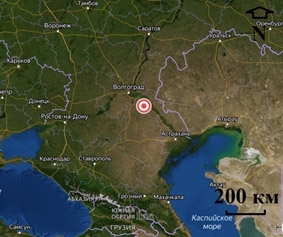
On the territory of the Northern Sarpinsky lowland plain landscape area of the Caspian lowland in the zone of light chestnut soils soil-geobotanic studies were carried out to obtain new data which would allow to estimate the range of variation of soil salinity, which is characteristic for plant species and plant communities of the desert steppe of the Kalmykia Republic, and to calculate the digital models to indicate the degree of soil salinity according to geobotanical data. Along the 64meters-long transect with 1-m step, geobotanical sites, soil digs and wells up to 2 meters deep were laid. In soil samples, the salinity index was measured as pNa in an aqueous suspension (1:5). The results allowed us to determine the quantitative boundaries of soil salinity for 12 plant species and 7 plant communities for 3 depths (0-30, 0-50, 0-100 cm). In relation to soil salinity, three groups of plants were distinguished. The first group includes species confined to non-saline soils with a narrow range of salt content values. The second group has a wide range in terms of salinity and a preference to non-saline soils. The third group includes saline species (halophytes) confined to saline and highly saline soils. Of the 7 plant communities found, two (Stipa lessingiana + Festuca valesiaca + Artemisia lerchiana and Stipa lessingiana + Festuca valesiaca + Tanacetum achilleifolium) are distributed on non-saline soils up to a depth of 2 m; two others (Festuca valesiaca + Artemisia lerchiana + Tanacetum achilleifolium and Artemisia lerchiana + Tanacetum achilleifolium + Artemisia pauciflora) tend to non-saline soils within 0-50 cm, and three (Kochia prostrata + Artemisia pauciflora, Artemisia pauciflora and Poa bulbosa + Anabasis aphylla) are found only on saline soils from a depth of 25-50 cm. Based on data on the presence of plant species as predictors, the CART (decision tree) method predicted the degree of soil salinity with an accuracy of 80% for the 0-30 cm layer, 81% for the 0-50 cm layer, and 64% 0 for the 0-100 cm layer. Significant predictor plants (rank>60) were Kochia prostrata, Tanacetum achilleifolium, Artemisia austriaca, and Festuca valesiaca. Other species have low values of importance (reliability) as predictors.

Keywords: soil salinization, phytoindication, plant species and community, indicators of depth and degree of salinization, importance, reliability, CART and Random forest algorithms, machine learning, communication models, accuracy of indication.

DOI: 10.24411/1993-3916-2021-10152

About the Journal

  • General Information
  • Open Access 
  • Preprint
  • Topics of the journal
  • Editoral Board
  • Editorial Policy
  • Editorial Ethics

Articles Supplying

  • Rules of Manuscripts Supplying
  • Articles Design
  • Article Structure
  • Guidens for Writing an Article
  • Articles Translation

Review of manuscripts

  • Review of manuscripts

Archive

  • 1990s editions
  • 2000s editions
  • 2010s editions
  • 2020s editions
    • Issues for 2020
    • Issues for 2021
    • Issues for 2022
    • Issues for 2023
    • Issues for 2024
    • Issues for 2025
  • Events

_______________________

©2026 - Arid Ecosystems - Weaver Xtreme Theme
↑