
↓
 

ISSN 1993-3916

Arid Ecosystems

The “Arid Ecosystems” journal was organized by the decision of General Biology Division of the Russian Academy of Sciences.

  •  Home
  • Preprint
  • Contacts
  • Open Access 
  • Archive
    • Issues 1990s
      • Issues for 1995
      • Issues for 1996
      • Issues for 1997
      • Issues for 1998
      • Issues for 1999
      • Issues for 2000
    • Issues 2000s
      • Issues for 2001
      • Issues for 2002
      • Issues for 2003
      • Issues for 2004
      • Issues for 2005
      • Issues for 2006
      • Issues for 2007
      • Issues for 2008
      • Issues for 2009
      • Issues for 2010
    • Issues 2010s
      • Issues for 2011
      • Issues for 2012
      • Issues for 2013
      • Issues for 2014
      • Issues for 2015
      • Issues for 2016
      • Issues for 2017
      • Issues for 2018
      • Issues for 2019
    • Issues 2020s
      • Issues for 2020
      • Issues for 2021
      • Issues for 2022
      • Issues for 2023
      • Issues for 2024

Архив метки: soil fertility

GLOBAL CLIMATIC CHANGES OCCURRING IN MODERN CONDITIONS ARE A DETERMINING FACTOR IN THE DIRECTION OF RESEARCH ON THE RATIONAL USE OF SOIL RESOURCES

Arid Ecosystems

UDC 631.48.11

Kaziev M-R.A., Imasheva S.N., Teimurov S.A., Balamirzoeva Z.A. GLOBAL CLIMATIC CHANGES OCCURRING IN MODERN CONDITIONS ARE A DETERMINING FACTOR IN THE DIRECTION OF RESEARCH ON THE RATIONAL USE OF SOIL RESOURCES // Arid Ecosystems. 2023. Vol. 29. № 2 (95). P. 45-52. | PDF

Modern global climate changes determine the direction of research on the rational use of soil resources. In the southern regions of Russia, including the Republic of Dagestan, agricultural conditions are quite complicated due to climate aridity, progressive aridization and desertification. The ongoing studies show that without taking into account the directions of adaptive changes of the soil cover, the economic efficiency of the developed measures can be damaged. Therefore, the goal of our work was to determine the regional adaptation changes to reduce the negative impacts of droughts, dry winds and dust storms that affect the economics of Dagestan.

Keywords: adaptation measures, regions, climatic changes, vulnerability, soil fertility, restoration of herbage, forage lands, pasture passport.

Financing. The work was carried out for the state task of the Federal Agrarian Scientific Center of the Republic of Dagestan, topic No. 122021800247-5 (FNMN-2022-0010) “Improving the Adaptive Landscape System of Agriculture Based on the Development of New Resource-saving Technologies for Cultivating Crops and Agroecological Assessment of Land. Improvement of the Organizational and Economic Mechanism to Increase the Efficiency of Agricultural Production in the Republic of Dagestan”.

DOI: 10.24412/1993-3916-2023-2-45-52

EDN: OEXJJV
TYPIZATION OF ARABLE LAND IN AGROLANDSCAPES OF VOLGOGRAD REGION

Arid Ecosystems

Belyakov A.M. TYPIZATION OF ARABLE LAND IN AGROLANDSCAPES OF VOLGOGRAD REGION // Arid ecosystems. 2021. V. 27. № 1 (86). P. 119-126. | PDF

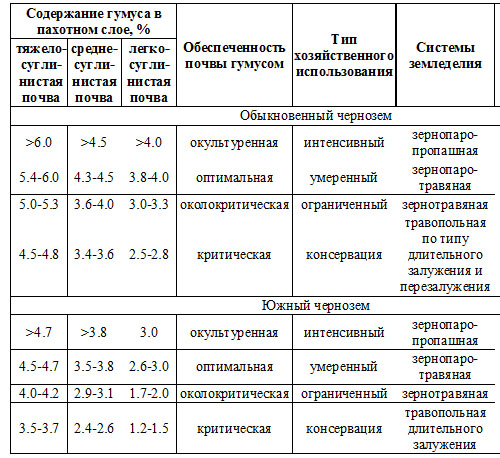
By the example of the Volgograd region the problem of the ecological state of the agrolandscapes of the zone of insufficient moisture and the modern approaches to their preservation and improvement is indicated. The potential agroresources of the region, the state and level of production of the agricultural sector at the moment are presented. Scientifically based the methodological approaches of doing economic activity on the principles of adaptive landscape agriculture are presented. Typization of arable land in agrolandscapes of the Volgograd region was carried out taking into account the bioclimatic potential of land use territories. Particular importance is attached to the distribution of arable land along the slopes of the area, since the role of the relief in varying the crop yields is very high and amounts to 40-70%, and depends on the erodedness of the soil, the crop may decrease by 10-80%. There is a definite correlation between grain yield and soil properties. In particular, the improvement of the nutrition regime of the soil and an increase in the cultivation of the soil contribute to reducing the negative impact of drought on the yield of grain crops. The method for differentiating arable land by intensity of use has developed in the FSC of Agroecology of the RAS, where the provision of the arable layer with total humus was taken as the main criterion for the level of soil fertility. Four levels were highlighted: cultivated, optimal, near-critical and critical. Ultimately, the development of adaptive-landscape approaches is confirmed by the results of practical farming.

Keywords: agrolandscape, adaptive farming, typization of arable land, agrotechnology, bioclimatic potential, soil fertility.

DOI: 10.24411/1993-3916-2021-10143

About the Journal

  • General Information
  • Open Access 
  • Preprint
  • Topics of the journal
  • Editoral Board
  • Editorial Policy
  • Editorial Ethics

Articles Supplying

  • Rules of Manuscripts Supplying
  • Articles Design
  • Article Structure
  • Guidens for Writing an Article
  • Articles Translation

Review of manuscripts

  • Review of manuscripts

Archive

  • 1990s editions
  • 2000s editions
  • 2010s editions
  • 2020s editions
    • Issues for 2020
    • Issues for 2021
    • Issues for 2022
    • Issues for 2023
    • Issues for 2024
  • Events

_______________________

©2026 - Arid Ecosystems - Weaver Xtreme Theme
↑