↓
 

ISSN 1993-3916

Arid Ecosystems

The “Arid Ecosystems” journal was organized by the decision of General Biology Division of the Russian Academy of Sciences.

  •  Home
  • Preprint
  • Contacts
  • Open Access 
  • Archive
    • Issues 1990s
      • Issues for 1995
      • Issues for 1996
      • Issues for 1997
      • Issues for 1998
      • Issues for 1999
      • Issues for 2000
    • Issues 2000s
      • Issues for 2001
      • Issues for 2002
      • Issues for 2003
      • Issues for 2004
      • Issues for 2005
      • Issues for 2006
      • Issues for 2007
      • Issues for 2008
      • Issues for 2009
      • Issues for 2010
    • Issues 2010s
      • Issues for 2011
      • Issues for 2012
      • Issues for 2013
      • Issues for 2014
      • Issues for 2015
      • Issues for 2016
      • Issues for 2017
      • Issues for 2018
      • Issues for 2019
    • Issues 2020s
      • Issues for 2020
      • Issues for 2021
      • Issues for 2022
      • Issues for 2023
      • Issues for 2024

Архив метки: Western Transbaikalia

HEAVY METALS IN ECOSYSTEMS OF CRYOARID LANDSCAPES OF THE WESTERN TRANSBAIKALIA

Arid Ecosystems

UDC  631.4

Chimitdorzhieva G.D., Bodeeva E.A., Chimitdorzhieva E.O. HEAVY METALS IN ECOSYSTEMS OF CRYOARID LANDSCAPES OF THE WESTERN TRANSBAIKALIA // Arid ecosystems. 2022. V.28. № 2 (91). P. 62-70. | PDF

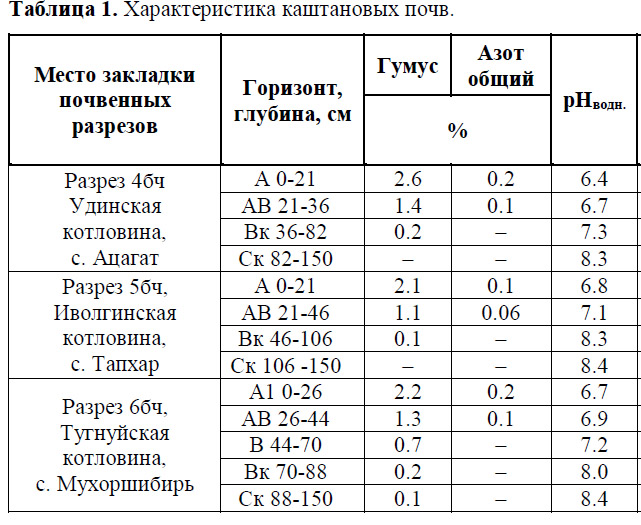
The results of experimental work on the study of the transformation flux of heavy metals: copper, zinc, nickel and lead from parent rocks into chestnut soils, then into virgin grass stand and humic substances are presented. The soil-forming rocks are deluvial and deluvial-proluvial deposits, as well as deposits of sands and pebbles, which, as a result of their weathering, movement and redeposition, determine the unequal granulometric, mineralogical and chemical composition of rocks, affecting the composition of the soil cover. Chestnut soils are characterized by an arid climate, a long stay in a frozen state, low bioproductivity, low power, light particle size distribution, and low humus content. For the extraction of humic substances, the Grimme method was used. The determination of the content of trace elements was carried out by the atomic absorption method with direct electrothermal atomization of samples. Heavy metals were determined on an atomic absorption spectrophotometer – AAS-15 Perkin Elmer. It was revealed that, due to the depletion of rocks in copper and nickel, there are few of them in the soils, and there is more zinc and lead, which, respectively, is reflected in the vegetation and humus.

Keywords: heavy metals, humic substances, parent rocks, vegetation, chestnut soils, Western Transbaikalia.

Financing. The work was carried out on the topic of state task No. 121030100228-4 «Evolutionary-genetic, biogeochemical and productive functions of soils of the Baikal region as a component of the biosphere, assessment of their resource potential and development of technologies for rational use and protection» 2021-2022.

DOI: 10.24412/1993-3916-2022-2-62-70

THE MAJOR NODES OF A BIODIVERSITY AND PHYTOGEOGRAPHICAL PHENOMENA OF PLANT WORLD OF SOUTHERN SIBERIA

Arid Ecosystems

Namzalov B.B. THE MAJOR NODES OF A BIODIVERSITY AND PHYTOGEOGRAPHICAL PHENOMENA OF PLANT WORLD OF SOUTHERN SIBERIA // Arid ecosystems. 2021. V.27. № 3 (88). P. 24-36.

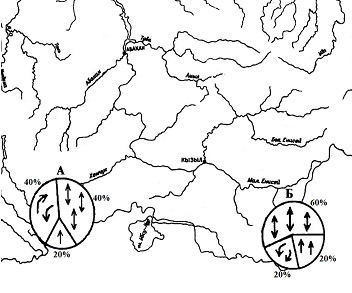
The most important nodes are distinguished as standards of plant biodiversity in various sectors of Southern Siberia: A – Saylyugem – Mongun-Taiga in Gorny Altai and Western Tuva; B – Sangilen-Darkhat in Southeast Tuva and Mongolia; C – Selenginsk-Daursky (Western Transbaikalia) in Buryatia. In the mountains of the Saylyugem ridge and Mongun-Taiga, there are many mountainous Central Asian species located on the eastern border of their ranges – the share of border species is up to 40% (Сoluria geoides, Potentilla lydiae, Allium pallasii, Lonicera microphylla, Artemisia obtusiloba  and others). This points to the historical links of this western sector of South Siberia with Middle and Central Asia. Endemic species that have the highest diversity index (60%) give originality to the flora of the Sangilen Highlands. The presence of boundary species as western and eastern geographic orientations, including Caragana jubata, Cymbaria dahurica, Echinops latifolius, Onosma gmelinii, Oxytropis tragacantoides, Lonicera microphylla and others, also indicate intense migration phenomena in the mountains of the Sangilen-Darhat node. The West Transbaikal node in the south of Buryatia, characterized by the presence of relics of the nemoral flora of East Asia, is of particular interest. These are Ulmus pumila, Armeniaca sibirica, Rhamnus erythroxylon, Filifolium sibiricum, Spodiopogon sibiricus, Saposhnikovia divaricata. According to this indicator, the flora of the Selenga Dauria has the highest level of diversity (40%).

The work reveals the features of floristic wealth and the diversity of the steppes of Transbaikalia and the Baikalia region, and the natural factors that cause them. It is shown, that this is a consequence of the ecotonic position of the territory (zonal-provincial), but also of the global climatic influence (Pacific, arid Central Asia). The complexity and variegation of vegetation in the steppes of Baikal Siberia gave us various interpretations of the boundaries of individual provinces and districts in geobotanical zoning schemes. The most complex is the vegetation of the steppes and forest-steppe of the Selenginsk midlands of Western Transbaikalia, which has been identified as a special buffer province.

Keywords: area, flora, endemic, relic and border species, nodes of biodiversity, Altai, Tuva, Western Transbaikalia.

Funding. This work was carried out with the financial support of the Russian Science Foundation for Basic Research, Project № 15-44-04112р_Siberia_a – «Relict and endemic plants of Transbaikalia: analysis of populations state, ecological mapping of refugium and perspectives of genetic fund preservation», Project № 16-04-20813 – «Rare plants and phytocenoses of Baikal region and adjacent territories».

DOI: 10.24411/1993-3916-2021-10160

LEYMUS CHINENSIS (Trin.) Tzvelev) IN THE WESTERN TRANSBAIKALIA: STRUCTURE OF COMMUNITIES, PRODUCTS AND BIOCHEMICAL COMPOSITION DURING CLIMATE ARIDIZATION

Arid Ecosystems

Merkusheva M.G., Badmaeva N.K., Boloneva L.N., Lavrentieva I.N. LEYMUS CHINENSIS (Trin.) Tzvelev) IN THE WESTERN TRANSBAIKALIA: STRUCTURE OF COMMUNITIES, PRODUCTS AND BIOCHEMICAL COMPOSITION DURING CLIMATE ARIDIZATION // Arid ecosystems. 2021. V. 27. № 1 (86). P. 86-96. | PDF

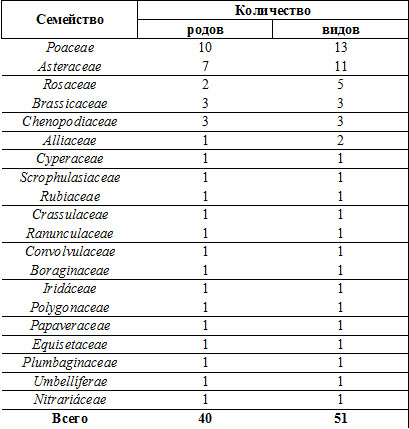
The phytocenotic characterization of communities with Leymus chinensis growing on different types of soils of the meadow steppe, steppe floodplain, and halophytic meadows of Western Transbaikalia is considered. The botanical composition revealed glycophytes – 28 species, halotolerant glycophytes– 17 and halophytes – 6. It was established that the genus Leymus includes 3 species: Leymus chinensis, L. buriaticus, L. littoralis. The botanical composition of communities with Leymus chinensis of Western Transbaikalia is represented by 51 species, 20 families, and 40 genera. The species composition is represented mainly by the steppe complex with different xerophytic species belonging to the Asian type of range. In the biomorph, the main share falls on rhizome species, and the proportion of young infants is also significant. The similarity between the species composition is in the interval “weak – average”, which is due to the significant participation of families and genera with low species richness. The primary production communities with  Leymus chinensis is 1029–2370 g/m2×year; the aboveground phytomass almost completely forms Leymus chinensis. The biochemical composition, feed value and protein ratio of the edible dry matter are determined by the growing conditions, but on the whole they comply with standard indicators.

Keywords: Leymus chinensis, communities, species diversity, production, biochemical composition, feed value, Western Transbaikalia, climate aridization.

DOI: 10.24411/1993-3916-2021-10140

MICROELEMENTAL COMPOSITION OF SOILS AND STEPPE PHYTOCENOSES OF THE WESTERN TRANSBAIkAL REGION

Arid Ecosystems

Kashin V.K.,  Ubugunov L.L. MICROELEMENTAL COMPOSITION OF SOILS AND STEPPE PHYTOCENOSES OF THE WESTERN TRANSBAIkAL REGION // Arid ecosystems. 2020. V. 26. № 2 (83). P. 86-95. | PDF

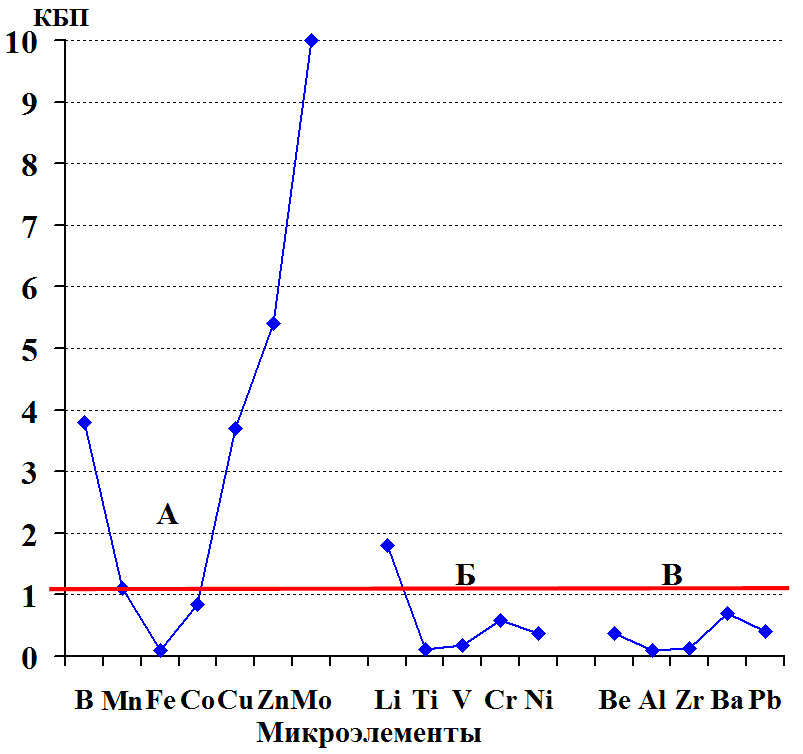
The average content and variation of 17 microelements in Kastanozems and vegetation of Western Transbaikalia steppe ecosystems have been determined. According to the rate of accumulation by steppe plants, Mo, Zn, B, Cu are classified as elements of high uptake; Li, and Mn are elements of medium uptake; and Be, Al, Ti, V, Cr, Fe, Co, Ni, Zn, Ba, and Pb are elements of low uptake. Correlation between the contents of microelements in plants and soil have been found for V, Cr, Mn, Fe, Zn, Ba, and Pb (r = 0.51–0.82). Deficit of Zn, Cu, and B and elevated contents Fe, Mo, Ba, and Sr have been revealed.

Keywords: microelements, steppe vegetation, coefficients of biological absorption, Western Transbaikalia.

DOI: 10.24411/1993-3916-2020-10100


About the Journal

  • General Information
  • Open Access 
  • Preprint
  • Topics of the journal
  • Editoral Board
  • Editorial Policy
  • Editorial Ethics

Articles Supplying

  • Rules of Manuscripts Supplying
  • Articles Design
  • Article Structure
  • Guidens for Writing an Article
  • Articles Translation

Review of manuscripts

  • Review of manuscripts

Archive

  • 1990s editions
  • 2000s editions
  • 2010s editions
  • 2020s editions
    • Issues for 2020
    • Issues for 2021
    • Issues for 2022
    • Issues for 2023
    • Issues for 2024
  • Events

_______________________

©2025 - Arid Ecosystems - Weaver Xtreme Theme
↑