↓
 

ISSN 1993-3916

Arid Ecosystems

The “Arid Ecosystems” journal was organized by the decision of General Biology Division of the Russian Academy of Sciences.

  •  Home
  • Preprint
  • Contacts
  • Open Access 
  • Archive
    • Issues 1990s
      • Issues for 1995
      • Issues for 1996
      • Issues for 1997
      • Issues for 1998
      • Issues for 1999
      • Issues for 2000
    • Issues 2000s
      • Issues for 2001
      • Issues for 2002
      • Issues for 2003
      • Issues for 2004
      • Issues for 2005
      • Issues for 2006
      • Issues for 2007
      • Issues for 2008
      • Issues for 2009
      • Issues for 2010
    • Issues 2010s
      • Issues for 2011
      • Issues for 2012
      • Issues for 2013
      • Issues for 2014
      • Issues for 2015
      • Issues for 2016
      • Issues for 2017
      • Issues for 2018
      • Issues for 2019
    • Issues 2020s
      • Issues for 2020
      • Issues for 2021
      • Issues for 2022
      • Issues for 2023
      • Issues for 2024
      • Issues for 2025

Архив рубрики: article-3-2021

Навигация по записям

Следующие записи →

INFLUENCE OF AGGREGATION OF CHESTNUT AND MEADOW-CHESTNUT SOILS ON THEIR AGROPHYSICAL PROPERTIES IN THE TERSKO-SULAK PLAIN

Arid Ecosystems

Teymurov S.A., Imashova S.N., Ramazanov A.V. INFLUENCE OF AGGREGATION OF CHESTNUT AND MEADOW-CHESTNUT SOILS ON THEIR AGROPHYSICAL PROPERTIES IN THE TERSKO-SULAK PLAIN // Arid ecosystems. 2021. V.27. № 3 (88). P. 89-95.

The data of studying the physical properties of chestnut and meadow-chestnut soils are considered. The dependence of the density of the studied soils on both the size of aggregates and the features of the soil formation process is shown. In each particular case, this dependence is closely related to the genesis of soils and the peculiarities of their agricultural use. When considering the porosity of aggregates, estimated by the percentage of fractions, it is seen that the main share of interaggregate porosity in the studied soils is accounted for by large aggregates. The results of the obtained studies can be extrapolated to other areas of the soil cover of the studied area.

Keywords: soil structure, aggregate, density, porosity, genetic horizon.

Funding. This work was carried out within the state assignment No. 0733-2015-0002 “To Develop Methods of Fertilizers Usage (Green Manure, Straw, Manure) to Increase Soil Fertility and Corn Yield for its Grain and Grain Sorghum under the Irrigation of the Terek-Sulak Subprovince”.

DOI: 10.24411/1993-3916-2021-10168
YEAST AS AN ELEMENT OF SOIL BIODIVERSITY AMPELOCENOSIS IN THE CONDITIONS OF ARID CLIMATE

Arid Ecosystems

Abdullabekova D.A., Magomedova E.S., Magomedov G.G., Kachalkin A.V. YEAST AS AN ELEMENT OF SOIL BIODIVERSITY AMPELOCENOSIS IN THE CONDITIONS OF ARID CLIMATE // Arid ecosystems. 2021. V.27. № 3 (88). P. 96-102.

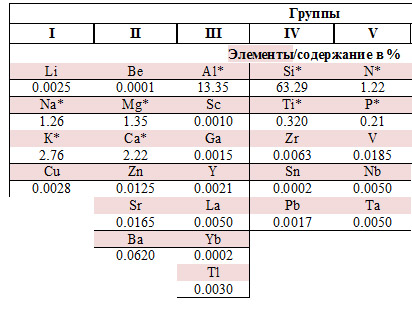
The results of the study of the light chestnut soil of ampelocenosis located in the zone of the semi-desert-steppe regime with a low hydrothermal coefficient are presented. Analysis of the chemical composition revealed that the soil is non-saline, saturated with bases and has a deficiency of certain plant nutrients. The study of the taxonomic composition of yeast, which can act as a model group of microorganisms in the study of soil-microbiological processes, has shown the ability of this soil to play the role of a biological reservoir for storage and distribution in the natural cycle of various physiological groups of yeast. The yeast complex included 11 species: 2 – basidiomycetes, 9 –ascomycetes, among which the yeast Aureobasidium pullulans and Lachancea thermotolerans significantly dominated. The yeast was isolated in a direct and cumulative manner; the species identification of pure cultures was carried out on the basis of the analysis of the nucleotide sequences of the rDNA region. The accumulation of allochthonous yeasts, as well as other groups of microorganisms, affecting the biodiversity of the ampelocenosis soil, expands the potential for the participation of mycobiota in soil processes.

Keywords: soil yeast, physicochemical composition of soil, dry steppe zone, yeast complex.

Funding. This work was carried out with the financial support of the Russian Foundation for Basic Research, Grant No. 12-04-01222 “Study of the yeast biological diversity in connection with altitudinal-zonal differentiation (on the example of the plain, piedmont and mountainous territories of Dagestan)”, and the Russian Science Foundation, Grant No. 19-74-10002 «Endophytic Yeast of Crops: Monitoring of its Spread and Role in Plant Protection».

DOI: 10.24411/1993-3916-2021-10169

PERFORMANCE FEATURES OF CONSTRUCTED WETLANDS IN ARID AREAS

Arid Ecosystems

Rybka K.Y., Shchegolkova N.M. PERFORMANCE FEATURES OF CONSTRUCTED WETLANDS IN ARID AREAS // Arid ecosystems. 2021. V.27. № 3 (88). P. 103-110.

The article discusses the features of wastewater treatment in arid regions using constructed wetlands (CWs) – shallow artificial streams, planted with higher aquatic vegetation. It is known that due to the increased temperature, the efficiency of arid CWs is higher in some parameters compared to similar treatment systems in other climatic zones. However, arid wetlands have a number of features that have not yet been covered in the scientific literature. In this article, arid CWs are considered from two positions – from the point of view of the water budget of the system and the energy balance. It is shown that evapotranspiration becomes the main expenditure item of the water balance of CWs under arid conditions, which in some cases accounts for up to 70% of the total water loss in wetlands. At the same time, evapotranspiration is the main cooling mechanism for arid CWs. In conclusion, recommendations are given for the design of constructed wetlands in areas with a hot dry climate, aimed primarily at saving water resources. These include: the use of subsurface wetlands with vertical flow and artificial aeration, planting plants with minimal transpiration and the use of submerged macrophytes, planting trees around the perimeter of a wetland for shading and reducing wind speed, etc.

Keywords: wastewater treatment, arid constructed wetlands, arid areas, wetland water budget, wetland energy balance.

Funding. This work was carried out with the financial support of the Russian Foundation for Basic Research, Project No. 18-29-25027 “Influence of Taxonomic and Functional Diversity of Microbial Communities on the Purification Efficiency of Solid, Liquid and Gaseous Environments in Various Treatment Facilities”, Theme No. 0147-2019-0004 (state registration No.  АААА-А19-119040990079-3) “ Development of Scientific and Technological Basis for Integrated Water Resources Management and Protection of Water Bodies on the Territory of the Russian Federation” within the state assignment of Water Problems Institute of the Russian Academy of Sciences.

DOI: 10.24411/1993-3916-2021-10170

GEOECOLOGICAL VALUE OF BLOCK POTENTIAL EASTERN CAUCASUS IN A DRY CLIMATE

Arid Ecosystems

Magomedov R.A. GEOECOLOGICAL VALUE OF BLOCK POTENTIAL EASTERN CAUCASUS IN A DRY CLIMATE // Arid ecosystems. 2021. V. 27. № 3 (88). P. 111-119 | PDF

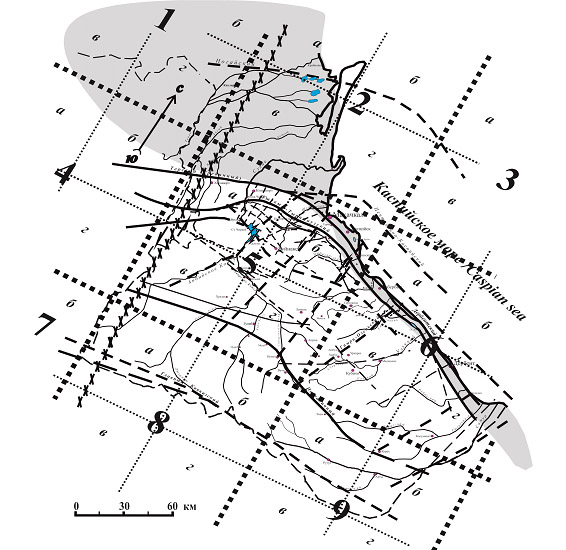
The geodynamic potential of the blocks of the north-eastern segment of the Eastern Caucasus under the conditions of land ecosystems settling down is estimated and its geoecological significance is shown. Potential waiting areas for possible foci of strong earthquakes that can negatively affect the environmental safety in the region are identified. The conducted research is a continuation of the work on the assessment of the geoecological situation that develops under the influence of potential catastrophic geological processes of a natural nature in the region that is subject to sedimentation and aridization.

Keywords: geodynamic potential, geoecology, safety, seismotectonics, zone of possible earthquake foci, quasi-homogeneous blocks.

Funding. This work was carried out within the state assignment No. АААА-А17-117021310201-9 «Study of catastrophic Geological Processes of Natural and Technogenic Origin in the Territory of the Eastern Caucasus».

DOI: 10.24411/1993-3916-2021-10171

Навигация по записям

Следующие записи →

About the Journal

  • General Information
  • Open Access 
  • Preprint
  • Topics of the journal
  • Editoral Board
  • Editorial Policy
  • Editorial Ethics

Articles Supplying

  • Rules of Manuscripts Supplying
  • Articles Design
  • Article Structure
  • Guidens for Writing an Article
  • Articles Translation

Review of manuscripts

  • Review of manuscripts

Archive

  • 1990s editions
  • 2000s editions
  • 2010s editions
  • 2020s editions
    • Issues for 2020
    • Issues for 2021
    • Issues for 2022
    • Issues for 2023
    • Issues for 2024
    • Issues for 2025
  • Events

_______________________

©2026 - Arid Ecosystems - Weaver Xtreme Theme
↑